
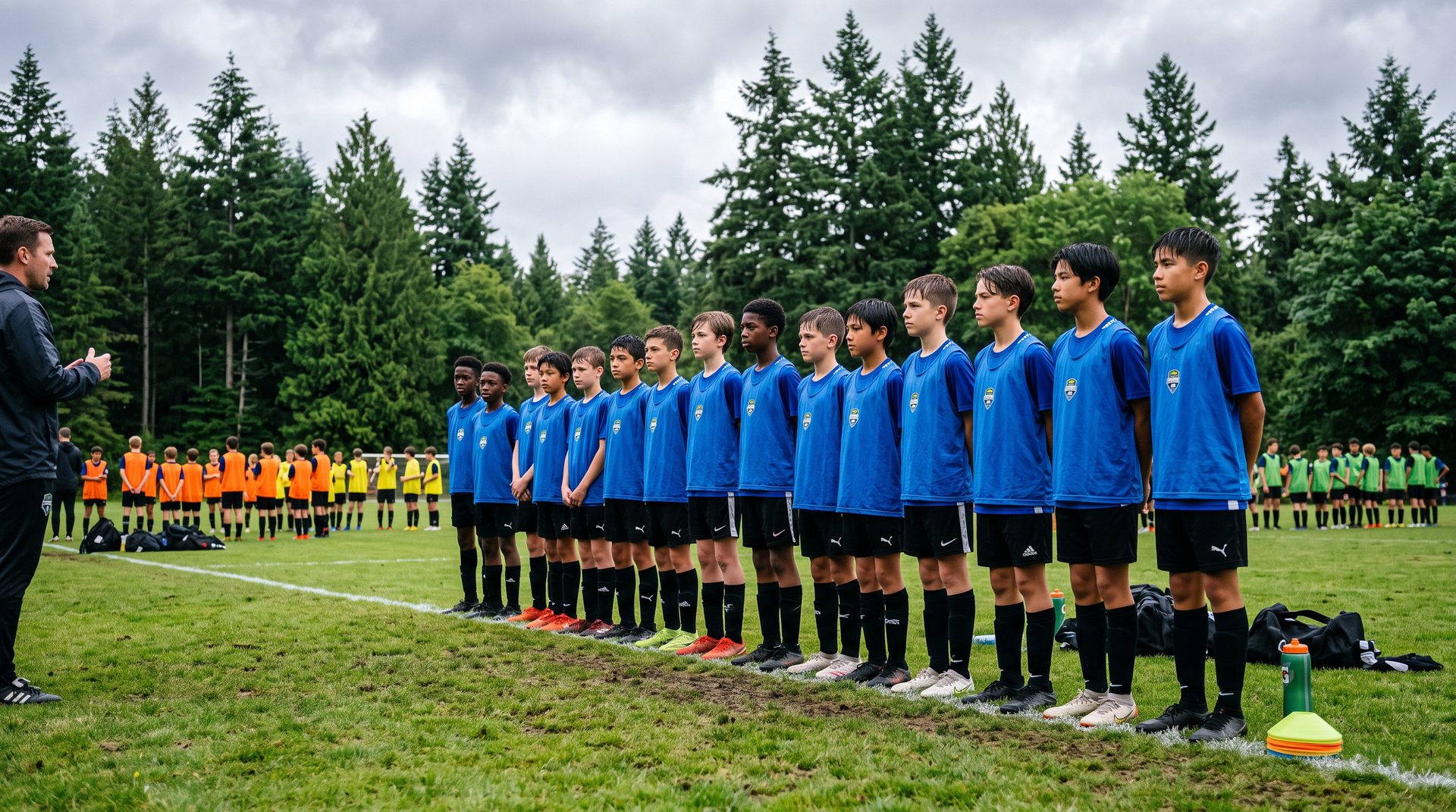
A structured route from first touch to final season
Twelve age groups, four development stages, and a competition structure designed around how young athletes actually grow.
Development first, results second
Most youth soccer is organised around the calendar. A child born in January competes against a child born in December of the same year, and for a decade the older, bigger child is rewarded for being older and bigger rather than better.
The BCSAA pathway is built the other way around. Competition formats, training emphasis and match groupings change deliberately at each stage, and bio-banding is applied where the spread in physical maturity is widest.
The aim is straightforward: keep more children playing for longer, and give the ones who want to go further a competitive environment that actually prepares them.
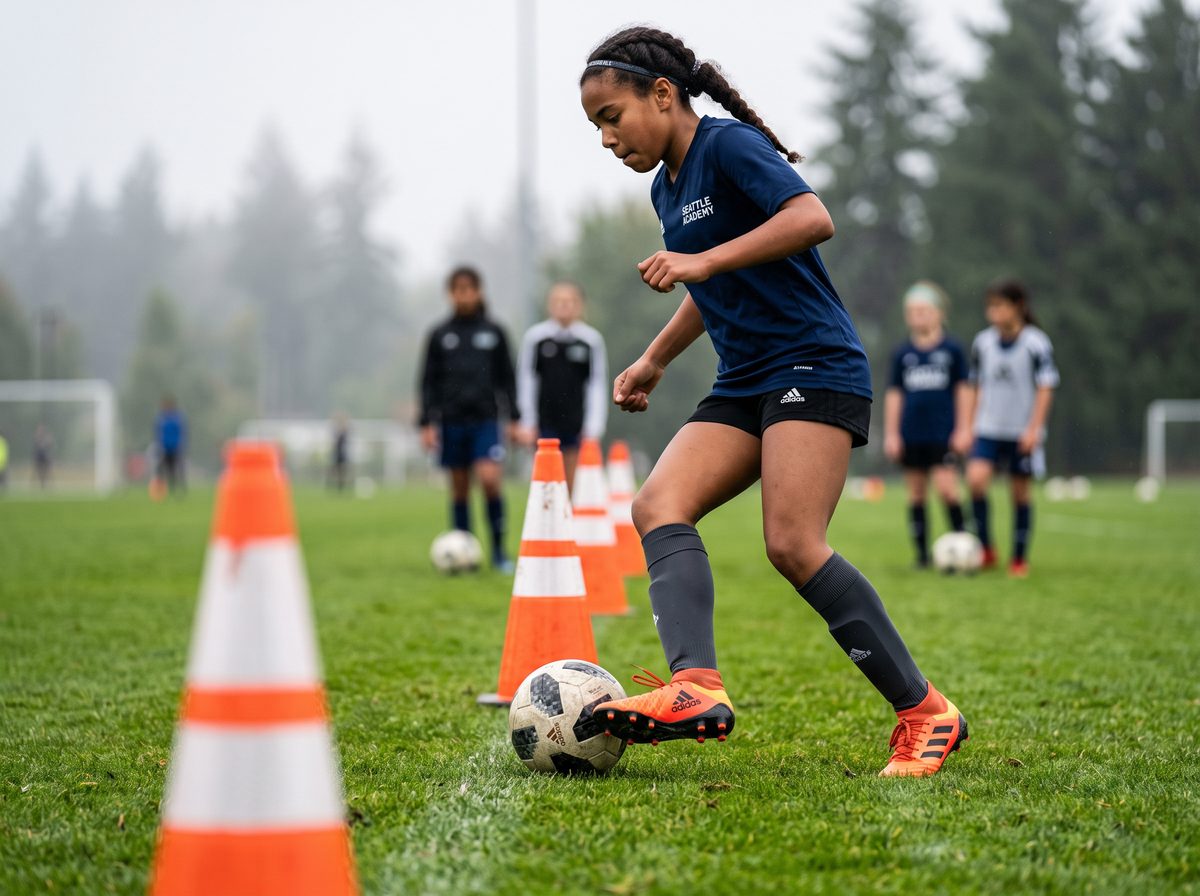
U7 to U18, stage by stage
Each stage has its own emphasis. Nothing is skipped and nothing is rushed.
U7 – U9
Foundation
Fundamental movement, ball mastery, love of the game
Small-sided formats with high ball contact. Emphasis on coordination, balance and confidence on the ball. Results are not recorded as standings; every player plays.
U10 – U12
Learning to Train
Technique under pressure, first tactical concepts
Players build a reliable technical base and begin to understand space, support and decision-making. Positional rotation is encouraged rather than early specialisation.
U13 – U15
Training to Train
Physical development, position-specific skill, game intelligence
The window in which growth differences are widest — the stage where bio-banding delivers the most benefit. Training load is managed against maturation, not birth year.
U16 – U18
Training to Compete
Competitive performance, resilience, next-step pathways
Full-format competition with tactical depth. Players are supported toward post-secondary, senior amateur and, where appropriate, professional pathways.
Four principles behind the pathway
Maturity, not birth year
Two players born in the same month can be four years apart in biological maturity. Bio-banding groups players by physical development so that a late-maturing player is not simply outmuscled out of the game.
Time on the ball
Small-sided formats at the younger ages multiply the number of touches, decisions and duels each player experiences in a session. Development is a function of repetition, not of match count.
Load managed against growth
Training volume and contact exposure are managed against a player’s growth stage. Injury risk rises sharply during peak height velocity, and the pathway accounts for it.
Late developers stay in the game
Relative age effect pushes smaller and later-maturing children out of competitive sport. Structuring competition around maturity keeps them in it long enough to find out how good they can be.
What happens after U18
BCSAA does not operate a senior competition. What the pathway does is leave a player at eighteen with a complete competitive record, a documented development history and coaching staff who can speak to their readiness.
From there, players move on through their academy — to post-secondary programs in Canada and the United States, to senior amateur soccer, and in some cases to professional environments. We are honest about this: the academy a family chooses matters more at that point than the league does, which is exactly why our licensing standards for academies are what they are.
Find an academy on the pathway
Players register through a licensed member academy rather than with BCSAA directly. Tell us where you are and we will point you to the programs operating near you.